Last updated: October 19, 2026 · Applies to the 2026 tax year (returns filed in 2027)
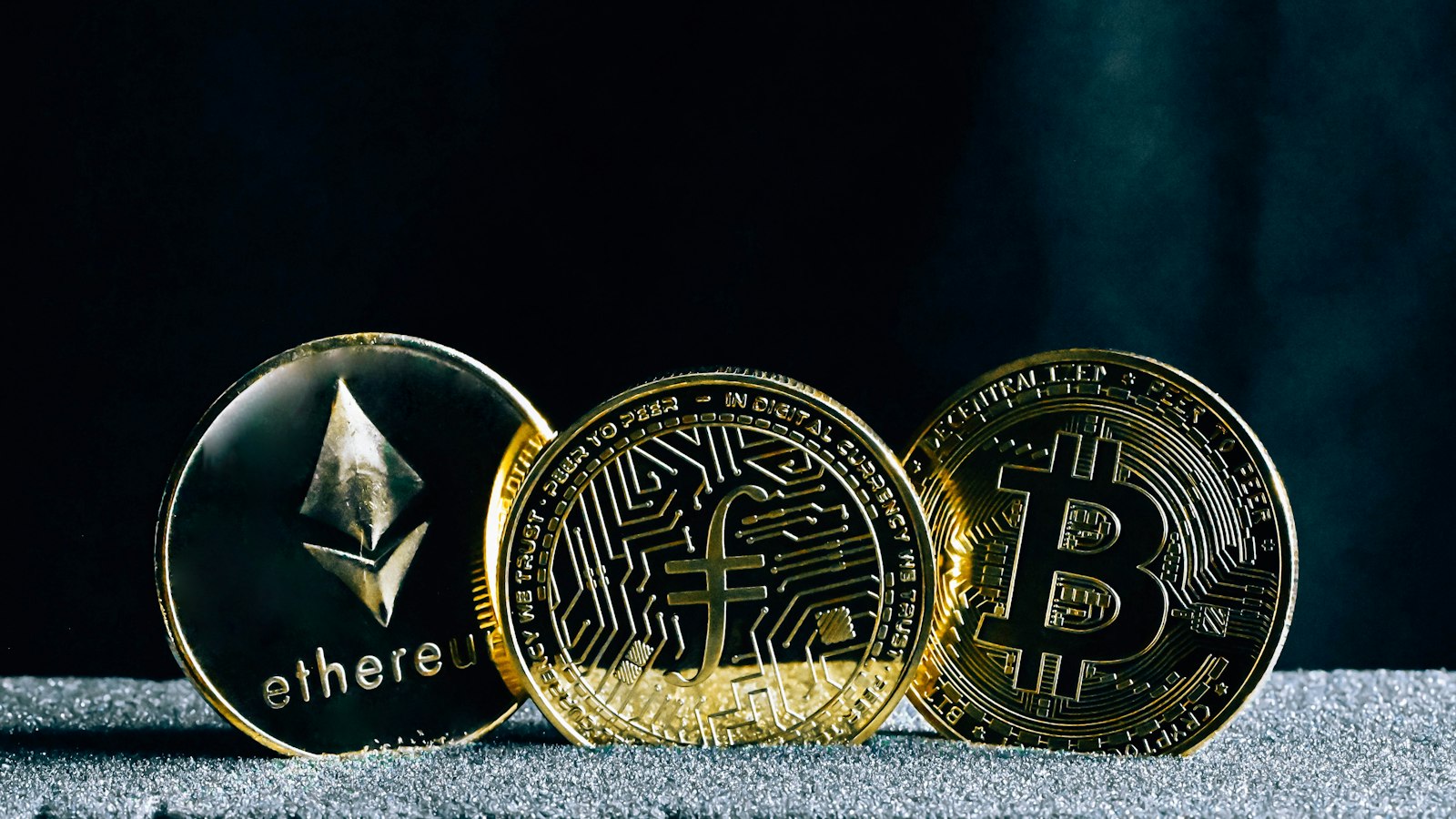
Trading one cryptocurrency for another, such as ETH for SOL or BTC for USDC, is taxable in the US, even if you never touch dollars. The IRS treats crypto as property, so a swap is a sale of the coin you give up at its market value, followed by a purchase of the coin you receive. This guide shows how to calculate the gain, what basis the new coin gets, how fees work, and what your exchange reports.
Key takeaways
- Every crypto-to-crypto trade is a taxable disposal of the coin you give up.
- Your proceeds are the dollar value of the coin you receive, minus the trading fee.
- The coin you receive starts with a new basis (its value at the trade) and a new holding period.
- Swaps into stablecoins count too.
- Like-kind exchange (Section 1031) does not apply to crypto.
- Trades on decentralized exchanges are taxable even though they don’t appear on a 1099-DA.
How a crypto-to-crypto trade is taxed
Each trade has two halves, and both matter for your taxes:
- You dispose of coin A. Your gain or loss is the fair market value of what you received, minus the transaction fee, minus your basis in coin A. Whether it is short-term or long-term depends on how long you held coin A.
- You acquire coin B. Its basis is its fair market value at the moment of the trade, and its holding period starts the next day. When you later sell or swap coin B, you measure from that basis.
Under the IRS regulations, the fee on a crypto-for-crypto trade is allocated entirely to the coin you dispose of: it reduces your proceeds rather than increasing the basis of the new coin.
Worked example: ETH to SOL and back to dollars
Sam bought 1 ETH in 2023 for $1,500. In March 2026 he swaps it for SOL worth $3,000 and pays a $10 fee. In November 2026 he sells all that SOL for $2,600.
| Trade | Proceeds | Basis | Gain or loss | Term |
|---|---|---|---|---|
| March: 1 ETH for SOL | $2,990 ($3,000 minus $10 fee) | $1,500 | +$1,490 | Long-term |
| November: SOL for dollars | $2,600 | $3,000 | −$400 | Short-term |
Sam ends the year with $1,100 more than he paid, but he reports a $1,490 long-term gain and a $400 short-term loss, a net $1,090 (the $10 difference is the fee). On Schedule D, the short-term loss first offsets any short-term gains; whatever is left offsets his long-term gain. Note the swap created a taxable gain even though no dollars ever reached his bank account in March.
What tax rate applies
Gains on coins held one year or less are short-term and taxed at your ordinary income tax rate. Gains on coins held more than one year are long-term and taxed at 0%, 15% or 20%, depending on your taxable income. For 2026:
| Long-term rate | Single (taxable income) | Married filing jointly |
|---|---|---|
| 0% | Up to $49,450 | Up to $98,900 |
| 15% | $49,451 to $545,500 | $98,901 to $613,700 |
| 20% | Over $545,500 | Over $613,700 |
Higher earners may also owe the 3.8% net investment income tax. Frequent swapping tends to turn would-be long-term gains into short-term ones, because each trade restarts the clock on the new coin.
Stablecoin swaps count too
Moving into a stablecoin to “lock in” a price is a sale. If you swap BTC for USDC, you realize the full gain or loss on the BTC at that moment. Later, swapping USDC for dollars or another coin is a second disposal, usually with a gain or loss of a few cents because the stablecoin stays close to $1. Brokers may report qualifying stablecoin sales as a single total on the 1099-DA instead of trade by trade, but you still report the activity.
Why like-kind exchange doesn’t help
Section 1031 used to let investors defer tax when swapping similar property. Since 2018, it applies only to real estate. Even for earlier years, the IRS concluded that swapping bitcoin for ether or litecoin did not qualify as like-kind. So there is no way to defer tax on a crypto-to-crypto trade by calling it an exchange.
What your exchange reports, and what it doesn’t
Centralized exchanges that act as brokers report swaps on Form 1099-DA: the coin you gave up appears as a sale, with proceeds equal to the value of what you received. For coins bought after 2025 and kept on that exchange, basis is reported too. Coins transferred in from elsewhere often show no basis, which we cover in 1099-DA missing cost basis.
Trades on decentralized exchanges (DEXs) such as Uniswap are a different story. In April 2025, Congress repealed the rule that would have required many DeFi platforms to issue 1099-DAs. Those trades are just as taxable, but nobody reports them for you. Your wallet history and tax software are the only record, so import every wallet you trade from.
How to report crypto-to-crypto trades
- Export the full trade history from every exchange and wallet.
- For each trade, record the date, the coin given up, its basis, and the dollar value of what you received.
- List each disposal on Form 8949, in the box that matches what the 1099-DA shows (or the “no 1099-DA” box for DEX trades).
- Carry the totals to Schedule D.
- Answer “Yes” to the digital asset question on Form 1040.
With more than a handful of trades, crypto tax software is the practical way to do this. Our step-by-step guide on how to report crypto on your taxes walks through Form 8949 in detail.
Common mistakes
- Only counting cash-outs. Tracking just the dollars you withdraw misses every swap in between, and each swap is its own taxable event.
- Carrying the old basis to the new coin. After a swap, the new coin’s basis is its value at the trade, not what you originally paid for the coin you gave up.
- Ignoring small trades. There is no minimum. A $20 swap is reportable just like a $20,000 one.
- Missing the holding period reset. Swapping a coin you held for years into another coin starts a new one-year clock.
Frequently asked questions
How do I value a trade if the coin I received has no clear price?
The regulations use the market value of the coin you received. If that can’t be determined with reasonable accuracy, you use the value of the coin you gave up instead. Record the source and time of the prices you use.
Is swapping a token for its wrapped version taxable?
The IRS hasn’t issued clear guidance on wrapping (for example ETH to WETH) or bridging tokens between blockchains. Some advisers treat these as taxable swaps and others don’t. Pick a consistent approach and discuss it with a tax professional if the amounts are significant.
Does a trade at a loss help me?
Yes. A swap realizes losses as well as gains. Capital losses offset capital gains, and up to $3,000 of net loss a year can offset ordinary income, with the rest carried forward.
Sources
- 26 CFR 1.1001-7: Tax treatment of digital assets (amount realized and transaction costs)
- IRS: Frequently asked questions on digital asset transactions
- IRS: Revenue Procedure 2025-32 (2026 capital gains thresholds)
- House Ways and Means: resolution overturning the DeFi broker rule (April 10, 2025)
- IRS: Instructions for Form 8949
This article is for educational purposes only and is not tax, legal or investment advice. Tax rules depend on your individual situation; consult a qualified tax professional before filing.